Fixing What Stops Your Prints
3D Printer Repair Services in Fayetteville for users facing failed prints, hardware malfunctions, or calibration issues they can't resolve
Your printer was producing clean parts last week, but now first layers won't stick, extruder gears grind against filament without feeding, or the hotend reaches temperature and immediately triggers thermal runaway errors that halt the build. FreedomFab Lab LLC diagnoses and repairs 3D printer hardware, firmware, and calibration problems in Fayetteville for hobbyists, businesses, and makerspaces dealing with machines that won't print reliably. Diagnostics identify whether the problem stems from worn components like PTFE tubing and nozzles, misconfigured firmware settings, or mechanical issues like loose belts and binding lead screws that prevent accurate motion.
The repair process starts with fault isolation—testing whether the extruder motor responds to commands, whether thermistors report accurate temperatures, and whether the bed maintains level across its surface or warps enough to cause adhesion failures. Common repairs include replacing clogged or worn nozzles, re-tensioning belts that have stretched and cause layer shifting, swapping failed thermistors or heating elements, and reflashing firmware that's been corrupted or incorrectly configured. Emergency repair services handle situations where a production run is halted or a time-sensitive prototype needs the printer back online within hours rather than days.
Bring your printer in for diagnostic testing if you're experiencing repeated print failures despite changing filament and re-leveling the bed.
What Proper Repair Requires
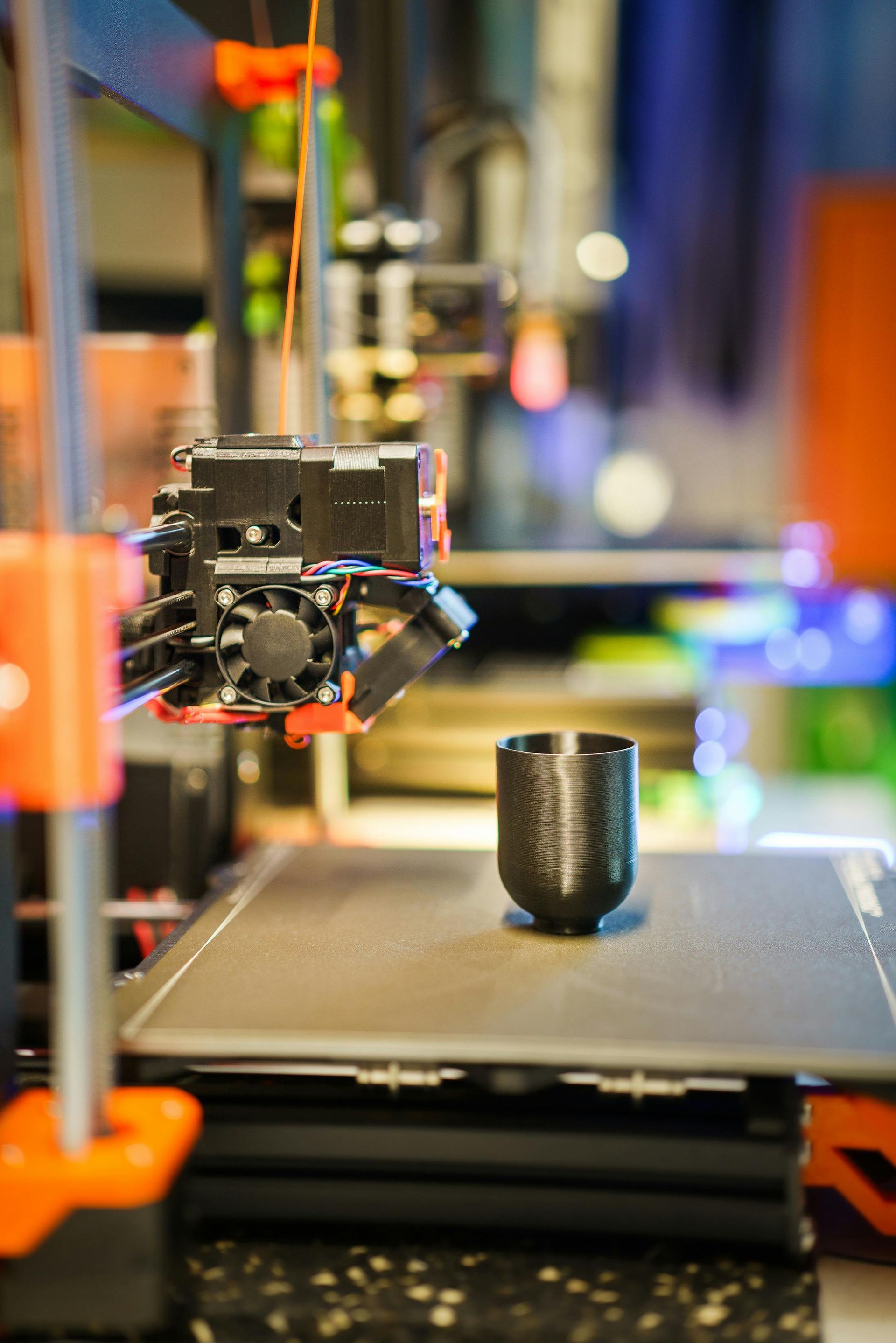
Hardware diagnostics involve systematic testing rather than part-swapping guesswork—measuring actual temperatures versus reported values, checking stepper motor current settings, and verifying that cooling fans activate at the correct layer heights. Firmware issues often appear after failed update attempts or when moving between different slicer programs that send incompatible G-code commands, requiring a complete reflash and configuration from known-good settings. Physical repairs replace worn components with parts that match the original specifications, not generic substitutes that introduce new problems like inconsistent extrusion or inaccurate temperature control.
Once repairs finish, you receive a printer that completes test prints with proper first-layer adhesion, consistent extrusion width, and dimensional accuracy within the machine's original tolerances. FreedomFab Lab LLC documents what failed and what was replaced so you understand what to monitor during future use and when preventive replacement makes sense before failures halt mid-print.
Maintenance plans provide scheduled service that addresses wear items before they cause failures—nozzle replacement at specific hour intervals, belt tension checks, lubrication of linear rails and lead screws, and firmware updates that fix known bugs. This approach works well for business environments where downtime costs more than preventive service, though it's optional for hobby users who can tolerate occasional troubleshooting between prints.
Answers to Frequent Service Questions
Owners bringing printers in for repair typically want to know what's causing their specific symptoms and how long their machine will be out of service.
What causes layer shifting that ruins prints halfway through?
Loose pulley setscrews allow belts to slip on stepper motor shafts, worn belts develop teeth damage that skips during fast moves, or stepper drivers overheat and skip steps when cooling fans fail, all of which result in layers printing offset from their intended positions.
How long does a typical repair take in Fayetteville?
Simple fixes like nozzle replacement or belt tensioning finish same-day if parts are in stock, while board-level repairs or sourcing specialty components for less common printer models can extend turnaround to several days depending on supplier lead times.
Why does bed leveling drift between prints?
Heated beds expand and contract with temperature cycles, shifting the plane slightly, while tramming wheels loosen from vibration on machines without locking nuts, and beds mounted on magnetic surfaces shift if the magnets weaken or the steel sheet warps from repeated heating.
What's included in firmware troubleshooting?
The service verifies that current firmware matches your printer model, checks that stepper directions and steps-per-millimeter values are correct, confirms thermal protection settings prevent runaway conditions, and validates that endstop logic prevents crashes into frame limits during homing sequences.
When should I replace the entire hotend assembly instead of just the nozzle?
If heat creep has caused filament to carbonize inside the heat break, if the heating block threads are stripped from over-tightening, or if the thermistor cartridge bore has deformed and no longer holds sensors securely, replacing the complete hotend costs less than attempting repairs that fail again within weeks.
FreedomFab Lab LLC offers drop-off repair with estimated completion timing provided after diagnostics, so call ahead to confirm parts availability if you know which component failed on your specific printer model.